
Vaping isn’t a safe habit for teens, and the clearest takeaway for parents and educators is this: nicotine vaping carries real health risks for young people, and it should never be used as a way to quit smoking. Most vaping products sold in Canada contain nicotine, which can lead to physical dependence and addiction. It reaches the brain and other organs quickly after being absorbed through the lungs, and it can raise blood pressure and heart rate within minutes. Youth vaping is also linked to a higher risk of tobacco and other substance use, mental health struggles, lung and heart problems, and unintentional injuries.
It’s a topic worth knowing about now. In Canada, 14% of youth aged 15 to 19 reported vaping in the past 30 days, compared to 4% of adults aged 25 and over. That’s a real gap, and it means conversations with young people matter.
This guide gives you a clear, scannable summary you can print or share: what vaping is, who needs support, the rights and responsibilities of families and schools, and where to get help. You’ll also find simple, activity-based ways to help kids aged 5 to 12 build strong, healthy habits early, long before vaping ever comes up.
What Vaping Is and Why It Matters for Kids’ Health
Vaping means breathing in an aerosol from a battery-powered device. It’s often called “vapour,” but that makes it sound gentler than it is. The aerosol can carry other substances deep into the lungs, and most vaping products sold in Canada contain nicotine. If you want a quick refresher, these 5 vaping facts are a good place to start.
Nicotine is absorbed through the lungs and moves quickly through the bloodstream to the brain and other organs. It can cause physical dependence and addiction, and it can raise blood pressure and heart rate for a short time after use. That’s a lot to ask of a growing body.
You might wonder why this matters if your child is only six or ten. The answer is that habits, attitudes, and curiosity start forming well before the teen years. Kids notice what adults do, what they say, and how comfortable they feel talking about tricky topics. A child who has heard calm, honest information at home or in the classroom is better prepared when the question of vaping eventually comes up.
This connects directly to what we care about here: active, healthy lifestyles. Strong lungs, steady energy, and a confident, clear mind help kids run, jump, and play to their full potential. Protecting those things starts with simple, caring conversations.
How Common Is Vaping Among Young People?
When we talk about teen vaping, it helps to start with the real numbers, because they’re more reassuring than the headlines might suggest. Most young people are not vaping. Still, a meaningful group is, and that’s a good reason to start conversations early.
According to Health Canada data on vaping in the past 30 days younger Canadians were more likely to have vaped than older adults. Here’s how it breaks down by age group:
| Age group | Vaped in the past 30 days |
|---|---|
| 15 to 19 years | 14% |
| 20 to 24 years | 18% |
| 25 years and over | 4% |
Look at that first row again. Roughly 14% of teens aged 15 to 19 had vaped recently, which means the large majority had not. That’s worth sharing with young people themselves, since many assume “everyone is doing it” when they aren’t.
So what does this mean if you’re raising or teaching a child aged 5 to 12? Vaping rates rise in the teen and early adult years, and that’s exactly why the primary-school years are such a good time to build confidence, healthy routines, and open, easy conversations. Kids who feel comfortable talking with you at ten are much more likely to keep talking at fifteen.
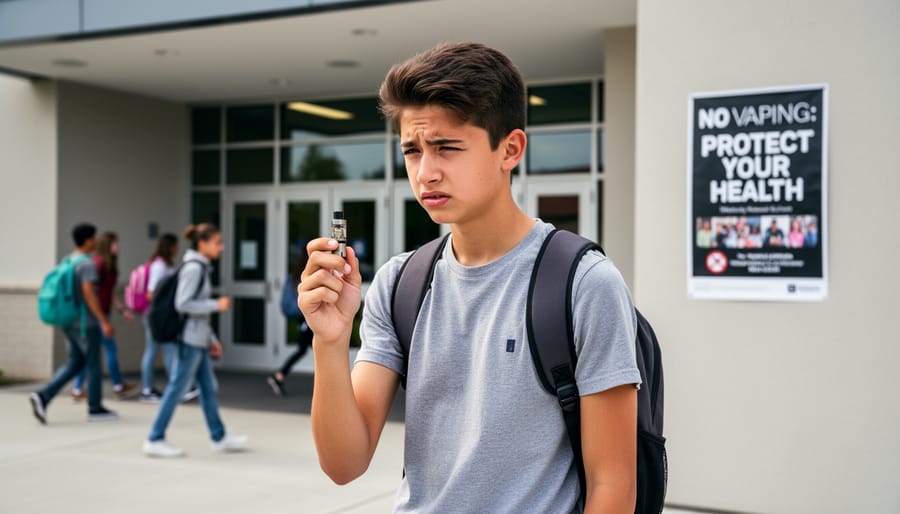
The Health Risks of Vaping for Teens: Body, Brain, and Beyond
What Nicotine Does to Growing Bodies
Think of nicotine like a package delivered by express courier. When a teen takes a puff from a vape, the nicotine is absorbed through the lungs and then moves quickly through the bloodstream, reaching the brain and other organs in no time. Health Canada explains more about nicotine absorption and effects and it’s a helpful read if you want the details.
Here’s why that speed matters. Nicotine can cause physical dependence and addiction. Over time, a young person’s body can start to expect that delivery, which makes it hard to simply stop. And since most vaping products sold in Canada do contain nicotine, this isn’t a rare risk. It’s the usual one.
There are short-term effects too. Vaping nicotine can raise blood pressure and heart rate for a short time, in the minutes and hours after use. You might picture a car engine revving while it’s parked. The body is working harder than it needs to, even though the person is sitting still.
The good news is that understanding this helps you explain it in kid-friendly terms. Growing bodies are busy building strong hearts, lungs, and brains, and active play is one of the best ways to support all three.
Why Vaping Isn’t a Safe Way to Quit Smoking for Young People
If a young person smokes and wants to quit, it’s natural for a parent or teacher to wonder whether vaping could be a gentler step down. Current health guidance says no. Vaping shouldn’t be used by youth as a way to quit smoking, because it hasn’t been shown to work well for this age group and there is evidence of harm.
Part of the problem is nicotine itself. Most vaping products sold in Canada contain it, and it can cause physical dependence and addiction. So swapping one source of nicotine for another can keep the cycle going instead of ending it.
The good news is that you don’t need to have all the answers. Listen without judgment, thank them for talking with you, and then connect them with a family doctor, school counsellor, or public health nurse. Quitting is hard at any age, and caring support from trusted adults makes a real difference.
Your Rights and Responsibilities as a Parent or Educator
You don’t need to be a health expert to protect the kids in your life. You just need to know what you can count on from others and what you can reasonably offer in return. Both sides are simpler than they sound.
As a parent or educator, here’s what you can expect and ask for:
- Honest, up-to-date information about the health risks of youth vaping.
- Age-appropriate health education at school, so children hear consistent messages.
- Access to support services, such as school counsellors, public health nurses, and your family doctor.
- Clear communication from your school about its vaping policies and what happens if a concern comes up.
And here’s what you can do:
- Model the healthy habits you hope kids will copy, like active play, good sleep, and managing stress without substances.
- Set clear, calm expectations at home or in your classroom, and explain the “why” behind them.
- Speak up early if you notice something that worries you, and keep the tone caring rather than punishing.
- Follow your school’s policies and work with staff or families as a team.
Notice that none of this requires perfection. Kids learn a lot from watching how the adults around them handle everyday choices, so your steady example counts for more than any single lecture.
One practical note: rules and school policies can change over time, and they differ from place to place. Before you build a plan around any specific requirement, check your school board, local public health unit, or official government health sites for the latest details.
Who Is Most Likely to Need Support? Spotting the Signs Early
Any young person can feel curious about vaping, so support isn’t only for kids who already vape. It’s for those who are curious, those who’ve tried it, those who are struggling to stop, and the parents, teachers, and caregivers who care about them. With 14% of Canadians aged 15-19 having vaped in the past 30 days, you’re far from alone if this topic is on your radar.
Adults can watch for gentle clues, such as new secrecy about belongings, unexplained sweet or fruity smells, sudden irritability, a lingering cough, or a drop in energy during play. These are reasons to open a caring conversation, not conclusions.
Being ready to talk is half the battle. Practising conversation starter skills during everyday play helps kids feel comfortable sharing worries later. Try a quick round of indoor games on a rainy afternoon, or head out for some outdoor games for 10-12 year olds, then ask open questions while everyone’s relaxed and laughing.
Active Ways to Build Vaping-Resistant Habits Starting Now

Kids aged 5 to 12 are still forming the habits, friendships and confidence that will carry them through the teen years. That makes now a great time to fill their days with movement, belonging and practice saying “no thanks.” Pediatric and school health guidance generally agrees that strong connections with caring adults, regular physical activity and open conversations all help young people make healthy choices later on.
Here are some easy ways to get started:
- Family active-play routine: pick a regular after-dinner slot for a walk, bike ride or backyard game, and let the kids take turns choosing the activity.
- Team games: organize a weekend game of tag, relay races or capture the flag, and rotate who captains so every child gets a turn leading.
- Confidence challenges: set a small goal like a new balance skill or a longer jump rope streak, and celebrate effort rather than results.
- “What would you do?” role-play: act out simple scenarios like a friend offering a dare, and practice short, easy answers such as “Nah, I’m good.”
- Car-ride conversation starters: ask open questions like “What do you think about what you saw on that show?” and listen more than you talk.
- Calm-down toolbox: teach deep breathing, stretching or a quick dance break as go-to ways to handle big feelings.
Short, regular chats tend to work better than one big talk. Keep your tone curious instead of stern, and answer questions honestly in language your child can follow. You might explain that vaping can cause nicotine addiction and affect the heart and lungs, without turning it into a scary lecture.
Educators can weave the same ideas into gym class, recess and classroom routines, from cooperative games to “brave voice” practice. When kids feel strong, included and heard, saying no to risky things gets a whole lot easier.
Where to Get Help: Trusted Support for Families and Schools

You don’t have to figure this out alone. Plenty of trustworthy people and services exist to support families and schools, and reaching out early is a smart, caring move. Here’s a simple guide to the kinds of help worth knowing about.
| Who to reach out to | How they can help | Good time to contact them |
|---|---|---|
| Family doctor or pediatrician | Answers health questions and can talk through next steps | When you’re worried about a child’s health or habits |
| School counsellor | Offers a supportive space to talk and connects families with resources | When you notice changes in mood, friendships, or behaviour |
| Public health nurse | Shares reliable information and guidance for families and classrooms | When you want accurate facts or ideas for health lessons |
| Local public health unit | Provides community programs and up-to-date local information | When you’re looking for services in your area |
| Provincial or national quit-support and youth health services | Offer youth-focused guidance and support | When a young person is vaping and wants help stopping |
Because programs and availability can change, check official government and health authority websites for current details. Those same sites are also a good place to look for printable parent and teacher resources, which can make a handy handout for your family fridge or a staff room bulletin board.
Whoever you contact first, keep the conversation calm and encouraging. Asking for help is a sign of strength, and it shows kids that support is always within reach.
Common Questions About Teen Vaping
What are the health risks of vaping?
Youth vaping is linked to a higher chance of trying tobacco and other substances, mental health concerns, lung and heart problems, and accidental injuries. Vaping with nicotine can also lead to physical dependence and addiction.
What effects does nicotine have on children and teens?
Nicotine is absorbed through the lungs and moves quickly through the bloodstream to the brain and other organs. It can cause dependence, and it can briefly raise blood pressure and heart rate in the minutes and hours after use.
Why shouldn’t vaping be used to quit smoking by young people?
Current health guidance says youth shouldn’t use vaping to quit smoking because it hasn’t been shown to work well and there is evidence of harm. A family doctor or school health professional can suggest safer, supportive options.
How can I start the conversation?
Choose a relaxed moment, like a walk or a game of catch, and ask what your child has heard about vaping. Listen first, share calm facts, and keep the door open for more chats.
Is a printable PDF handout useful?
It can be a handy way to share key points with other parents, teachers, or a school team. Pair it with real conversations, since talking and modeling healthy habits matter most. For up-to-date printable resources, check official government and health authority sites.
Have more questions? A family doctor, pediatrician, or school counsellor can answer them and point you toward trusted local support. Asking early, even when your kids are still young, is one of the best ways to help them grow into confident, healthy teens.
Vaping carries real risks for young people, from nicotine dependence to effects on the heart and lungs. But here’s the encouraging part: you don’t need to have all the answers to make a difference. Caring, honest conversations that start early, long before the teen years, help kids feel confident and ready to make healthy choices.
Pair those talks with plenty of active play, team games, and confidence-building challenges. Kids who feel strong, capable, and connected to others have the skills to say no when the moment comes.
If you ever feel unsure, help is close by. Your family doctor, school counsellor, or local public health unit can guide you, and official health websites are the best place to check for the latest information.
Found this useful? Share these tips with other parents and educators in your life, and subscribe to our newsletter for more child health insights and easy ideas to keep kids moving.