
Getting kindergarteners moving at home doesn’t require a backyard obstacle course or expensive equipment. Simple activities using household items like cushions, painter’s tape, and beach balls can deliver the 60 minutes of daily physical activity young children need while building coordination, balance, and strength.
Most parents searching for these activities face a common challenge: their five- and six-year-olds have energy to burn, but structured sports programs don’t start until later, and heading to the playground isn’t always practical. The solution lies in creating a rotation of 10 to 15 movement activities that take five to ten minutes each, require minimal setup, and can happen in living rooms, hallways, or small outdoor spaces.
The activities that work best for this age group combine gross motor skill development with play. Kindergarteners are still mastering fundamental movements like hopping on one foot, catching with two hands, and moving their bodies through space without bumping into furniture. They also have short attention spans, so switching between activities every few minutes keeps them engaged without the meltdowns that come from boredom or frustration.
This guide walks you through the exact materials you’ll need (most already in your home), the safety considerations specific to indoor movement, and a step-by-step process for setting up a sustainable physical activity routine. You’ll get specific activity examples tested with this age group, along with ways to verify your child is benefiting and ready to progress.
What You’ll Need to Get Started
The good news? You probably already have most of what you need lying around your house. Setting up engaging physical activities for kindergarteners doesn’t require a shopping spree or converting your garage into a gymnasium. A few basic items and a clear space are all it takes to get started.
Here’s what you’ll want to gather:
- Soft surfaces: Cushions, pillows, yoga mats, or folded blankets for jumping and tumbling
- Marking tools: Painter’s tape, masking tape, or sidewalk chalk to create boundaries and paths
- Balls: Beach balls, soft foam balls, or even rolled-up socks work perfectly
- Household props: Empty plastic bottles, cardboard boxes, paper plates, and laundry baskets
- Optional equipment: Hula hoops, bean bags, jump ropes, or small cones (often available at dollar stores)
- Music source: A phone, tablet, or speaker for dance and movement activities
Don’t feel pressured to buy specialized gear. A rolled towel becomes a balance beam. Cushions scattered on the floor create stepping stones. Empty tissue boxes make fantastic targets for tossing games.
As for space, you need less than you think. A cleared living room corner measuring roughly six by eight feet works well for most activities. If you have a hallway, that’s perfect for relay races and crawling games. Outdoor options like a backyard, driveway, or nearby park expand your possibilities but aren’t required, many families successfully run active play sessions entirely indoors, especially during bad weather.
The key is having enough room for your kindergartener to move their arms and legs freely without hitting furniture or walls. Clear breakables, push furniture to the sides, and you’re ready to begin.
Safety First: Setting Up a Safe Activity Space
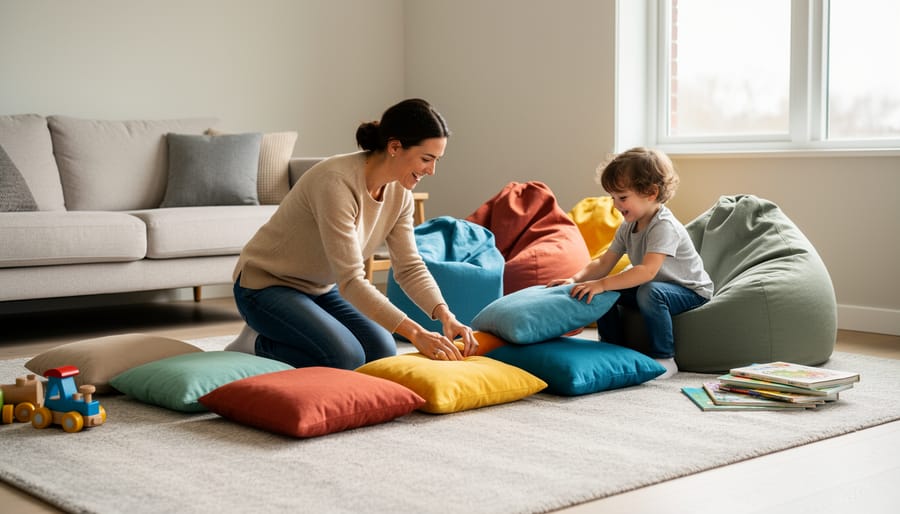
Before your kindergartener starts jumping, dancing, or climbing, take ten minutes to create a safe environment. These simple preparation steps prevent the most common home activity injuries and give you peace of mind while your child plays.
Clear the Activity Area
Walk through your chosen space and remove anything your child could trip over, bump into, or knock down. Push furniture against walls, pick up toys scattered on the floor, and move coffee tables or side tables out of the way entirely. Check for items on low shelves that could fall if bumped, and secure or remove any breakable decorations within reach. Don’t forget to look up, ceiling fans should be off during active play, and hanging light fixtures need enough clearance.
Pad Hard Surfaces
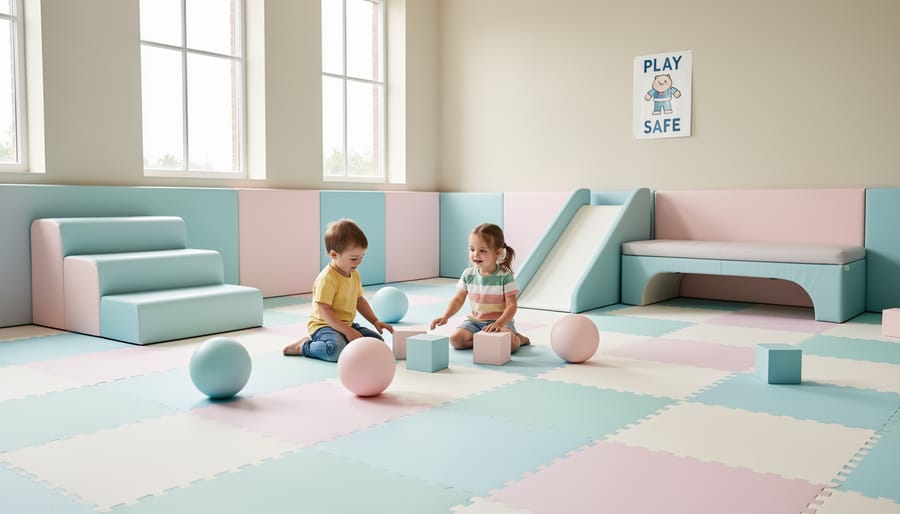
Kindergarteners fall, it’s part of learning movement skills. Place yoga mats, foam tiles, or thick blankets under areas where your child will jump or balance. If you’re using hardwood or tile floors, consider adding non-slip rug pads under any mats to prevent sliding. For activities near walls, attach foam corner guards to sharp edges at your child’s height.
Dress for Safe Movement
Your child should wear comfortable, fitted clothing without drawstrings or loose fabric that could catch on equipment. Bare feet work best for indoor activities to prevent slipping, though non-slip socks are fine if the floor is cold. Save the superhero cape for pretend play, anything that could get caught or wrapped around the neck stays off during active time.
Keep Water Close
Place a water bottle within easy reach before you start. Kindergarteners should take water breaks every 15-20 minutes during active play, following water and hydration guidance for young children. They often don’t recognize thirst until they’re already dehydrated, so build drink breaks into the activity routine rather than waiting for them to ask.
Check Outdoor Conditions
If you’re setting up activities outside, scan the ground for sticks, rocks, or uneven surfaces that could cause trips. Avoid play during extreme heat (above 85°F) or when surfaces are wet and slippery. Apply sunscreen 15 minutes before outdoor play, and keep activities in shaded areas when possible during peak sun hours.
Step-by-Step: Creating Your Home Activity Station
Choose and Prepare Your Space
Start by walking through your home with fresh eyes, looking for areas where your kindergartener can move freely without bumping into furniture or walls. The ideal space needs at least 8 by 10 feet of clear floor area, roughly the size of a small bedroom or half of a typical living room.
Living rooms work great because you’re nearby while cooking or working, but you’ll need to push couches against walls and roll up area rugs. Basements offer more permanent setup options since you won’t need to reset the space daily. If you’re choosing an outdoor area, pick a flat section of your yard away from garden beds, grills, or hard landscaping.
Once you’ve picked your spot, grab painter’s tape or sidewalk chalk to mark clear boundaries. This helps your child understand where the activity zone begins and ends. Measure the space with a tape measure if you’re planning specific games, knowing you have 12 feet for a balance beam path or 6 feet for a throwing target saves frustration later.
Clear everything breakable, sharp, or wobbly from the area. Move side tables, remove decorative objects from low shelves, and relocate anything your child might grab for balance that isn’t sturdy.
Set Up Activity Zones
Divide your prepared space into distinct zones that encourage different types of movement and keep your kindergartener engaged. Start with a jumping zone by placing cushions or a small mat in one corner where your child can safely practice hopping, leaping, and bouncing. Mark boundaries with colored tape so they know exactly where it’s safe to land.
Create a throwing target zone on a clear wall using painter’s tape to make circles or shapes at different heights. Position a laundry basket or large box a few feet away as an additional target for tossing soft balls or bean bags. This setup helps develop hand-eye coordination without risking damage to your home.
Lay out a balance path using tape lines, rope, or a series of cushions placed in a row. Make it winding rather than straight to add challenge and keep it interesting. Your kindergartener can practice walking heel-to-toe, hopping on one foot, or pretending to cross a “river” without falling in.
Designate an open area as a dance and movement space where your child has room to spin, stretch, and move freely to music. This zone works well for active games that require quick direction changes or creative movement. Keep this area completely clear of obstacles.
Label each zone with simple pictures or words your child can recognize, helping them choose activities independently and understand the purpose of each space. Rotate which zones are available every few days to maintain excitement and prevent boredom.
Organize and Store Materials
Store all activity materials in clear bins at your child’s eye level so they can see what’s available and help with setup. Label each bin with both words and pictures, draw or print simple images of balls, scarves, or bean bags next to the text. This builds reading skills while making cleanup easier.
Group similar items together: balls in one bin, soft throwing objects in another, balance equipment in a third. Keep a “daily rotation” basket with 2-3 activities you’ll focus on this week, storing the rest out of immediate view. Swap items every few days to maintain novelty without overwhelming your kindergartener with too many choices at once.
Mount a low hook or basket near your activity space for frequently used items like jump ropes or hula hoops. After each play session, involve your child in returning materials to their spots, this teaches responsibility and ensures everything’s ready for tomorrow’s movement time.
Test the Setup
Before your kindergartener dives in, walk through the space yourself. Get down on their level, literally crouch or crawl, to spot hazards from a child’s perspective. Check that all zones are clearly defined and nothing wobbles or slides when you step on it. Test each activity: can you reach the throwing targets? Is the balance path stable? Are materials within easy reach without needing to climb?
Run through a quick safety checklist: sharp corners padded, floor clear of obstacles, adequate cushioning under jumping areas. Make sure the space feels inviting, not cluttered or intimidating. If something feels off or too complicated, simplify it now. A five-minute walkthrough saves hours of frustration later and ensures your child can explore safely and independently from day one.
10 Engaging Activities to Start With
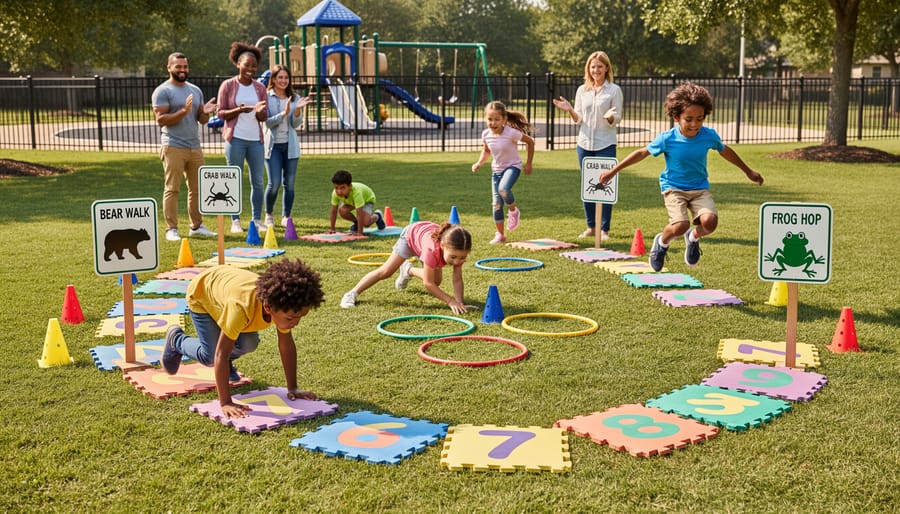
Here are ten activities designed to get kids moving without requiring specialized equipment or extensive space:
- Indoor Obstacle Course: Use cushions for jumping, tape lines for balance walking, and chairs for crawling under. Let your child complete the course three times, then switch the layout to maintain interest.
- Dance Freeze: Play music and have your kindergartener dance freely. When you pause the music, they freeze in whatever position they’re in. This builds body control and listening skills while burning energy.
- Balloon Volleyball: Blow up a balloon and challenge your child to keep it off the floor using only their hands, feet, or head. Count how many hits they can manage before it touches down.
- Animal Walks: Call out different animals and have your child move like them across the room, bear crawls, bunny hops, crab walks, or frog jumps. This strengthens core muscles and coordination.
- Target Throw: Place a laundry basket or box against the wall and give your child soft balls, bean bags, or rolled socks to toss. Start close and gradually increase the distance as their aim improves.
- Tape Line Balance: Create various shapes on the floor with painter’s tape, straight lines, zig-zags, or circles. Your kindergartener walks along the tape without stepping off, which develops balance and focus.
- Simon Says Movement Edition: Play traditional Simon Says using only physical actions: “Simon says hop on one foot,” “Simon says touch your toes,” or “Simon says spin around twice.”
- Pillow Path Jumping: Scatter cushions across the floor as “islands” and challenge your child to jump from one to another without touching the “water” (floor). Adjust spacing based on their jumping ability.
- Indoor Bowling: Set up plastic bottles or paper cups as pins and use a soft ball to knock them down. Your child can help reset the pins between rounds, adding a setup component to the activity.
- Follow the Leader: Take turns being the leader who creates movements for the other person to copy, jumping jacks, toe touches, arm circles, or silly walks. This works especially well when siblings play together.
Rotate through three or four activities per session rather than attempting all ten at once. Kindergarteners maintain better focus with shorter activity bursts, typically five to ten minutes each. Watch which activities your child gravitates toward naturally, then introduce variations to those favourites before cycling in new options from the list.
How to Know Your Setup Is Working
Your kindergartener will show you whether your setup is working through their behavior and excitement. Watch for spontaneous use of the activity space, when kids regularly choose physical play over screens without prompting, you’ve created something engaging. They should be able to sustain activity for 15-20 minutes at a time, and you’ll notice improvements in basic skills like balance, coordination, and throwing accuracy over a few weeks.
Pay attention to requests for “one more time” or invitations for you to watch their latest trick, these signal genuine engagement. If interest wanes after a week, rotate in two or three different activities while storing others away. Kindergarteners thrive on novelty, so switching activities every 7-10 days keeps the space fresh without overwhelming them with choices.
Look for skill progression markers: balancing on one foot for longer periods, throwing with better aim, or creating their own obstacle course variations. When activities become too easy, add simple challenges like hopping instead of walking, using non-dominant hands, or timing how fast they can complete a course. Some physical activities naturally enhance vocabulary and learning alongside movement skills.
Keep a simple weekly log noting which activities your child gravitates toward and how long they stay engaged. This helps you identify patterns and tailor your setup to their developing interests and abilities. If they consistently avoid certain activities, replace them rather than forcing participation, the goal is building a positive relationship with movement that lasts beyond kindergarten.
Common Questions About Home Physical Activities
How much physical activity does my kindergartener really need each day?
Experts recommend kindergarteners get at least 60 minutes of daily activity broken into smaller chunks throughout the day. This doesn’t need to happen all at once, three 20-minute sessions work just as well.
What if I don’t have much space at home?
You can create effective movement games in surprisingly small areas. Focus on activities like animal walks, balance challenges, and dance games that work in a hallway or cleared corner of any room.
How do I keep siblings of different ages engaged together?
Choose activities with built-in variations, like obstacle courses where younger kids can walk while older ones hop or crawl. Assign the older sibling as a “coach” or “demonstrator” to keep them invested while the kindergartener participates at their own level.
My child resists active play, how can I motivate them?
Start with what they already enjoy and add movement to it. If they love stories, act out characters; if they prefer music, make it a dance party. Keep sessions short at first and let them choose between two or three activity options to build ownership and enthusiasm.
Many parents worry about balancing active time with screen use. Canadian pediatricians recommend you limit screen time to 1 hour daily for this age group. One practical approach is to make physical activity the “ticket” to screen time, 10 minutes of jumping, dancing, or playing an active game earns 10 minutes of a show. This creates a natural rhythm where movement becomes part of the daily routine rather than a chore. When your kindergartener sees activity as fun rather than a requirement, motivation stops being a battle and starts being automatic.
Setting up physical activities at home doesn’t need fancy equipment or a huge backyard. What matters most is showing up consistently and making movement fun. Start with just one or two activities from this guide, maybe an obstacle course using couch cushions or a quick dance freeze session. As your kindergartener gets excited, you can rotate in new challenges and variations.
The habits you’re building now go far beyond burning energy. You’re teaching your child that movement is enjoyable, not a chore. You’re giving them coordination skills, confidence, and positive associations with being active. These early experiences shape how they’ll view fitness for years to come.
Keep it simple, stay consistent, and celebrate the small wins. Your living room is already equipped with everything you need to raise an active, healthy kid.